
5 Advantages of Automated Robotic Systems in Hazardous Environments
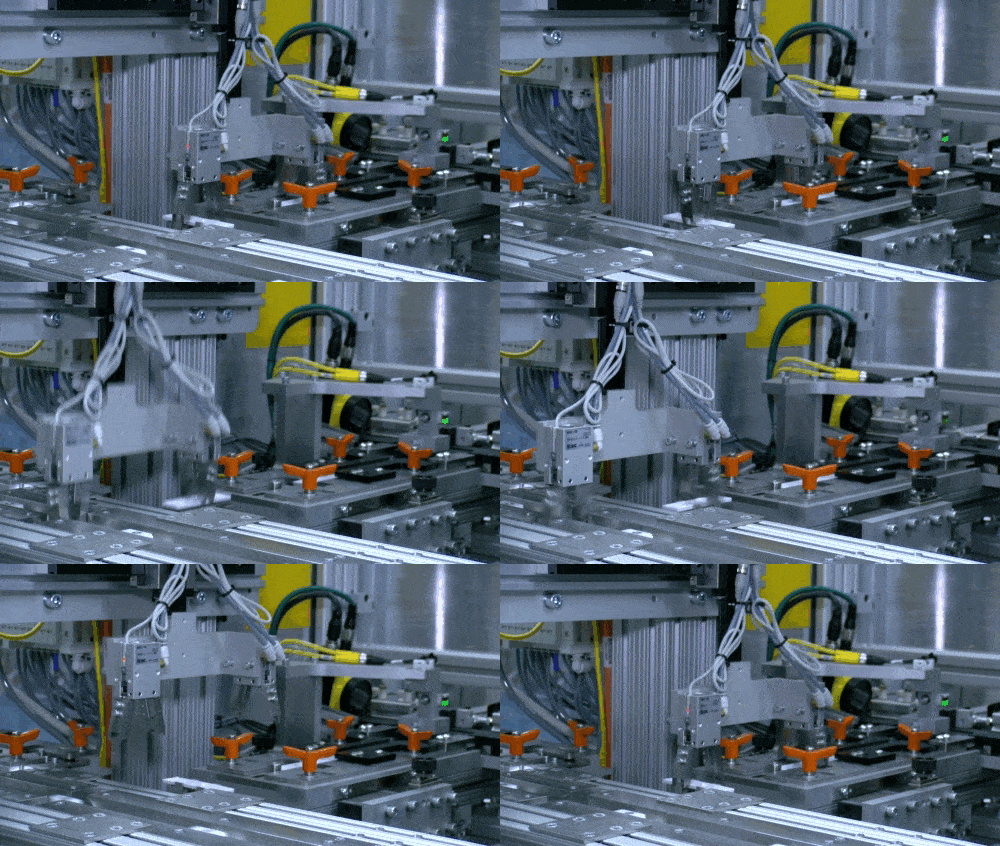
Automated robotic systems transform hazardous manufacturing and industrial environments around the globe. The introduction of hazmat robots, for example, has become indispensable in accomplishing tasks that would otherwise be too dangerous for the safety and well-being of human workers. With the integration of advanced sensors, artificial intelligence, and machine learning contributing significantly to expanding automated robotic capabilities, the systems have increasingly excelled in dynamic and dangerous production environments. Consequently, one crucial area where robotic technologies have impacted significantly is their use in hazardous environments or high-risk industrial applications.
What Constitutes a Hazardous Manufacturing Environment?
Hazardous manufacturing environments are workplaces where conditions present significant risks to workers’ health and safety due to factors such as exposure to toxic chemicals, extreme temperatures, high-pressure systems, or heavy machinery. These environments often involve dangerous tasks like welding, chemical processing, or working in confined spaces, which increase the potential for accidents or long-term health issues. Hazardous conditions may include flammable or explosive materials, radiation, or mechanical risks from operating large, complex machinery. Such environments require stringent safety measures, careful management to mitigate risks and protect workers, and increasingly, the use of specialized equipment like automated robotic systems.
Today, as robotic technologies have advanced, these automated systems are more capable of handling complex and hazardous operations than ever. They shield workers from exposure to harmful conditions and provide manufacturers with some advantages that often overlap or are interrelated. Here are five to consider:
5 Advantages of Automated Robotic Systems in Hazardous Environments
1. Reducing Risks and Increasing Safety
The primary advantage of having automated robotic systems in hazardous industrial environments is to reduce risks and improve safety, which fosters a more efficient and productive workplace. Automated systems can perform dangerous tasks without exposing human workers to harm. These systems can operate in extreme conditions, such as high heat, handle toxic materials or substances, or function in high-risk work zones, like confined spaces or elevated heights, where humans are unsafe or at risk.
By taking on tasks like heavy lifting, chemical handling, or machinery operation, robots significantly reduce the likelihood of workplace accidents and injuries. Their precision and reliability further mitigate risks associated with human error, ensuring safer conditions while maintaining uninterrupted operations.
2. Handling Hazardous Materials Remotely
The use of hazmat robots in hazardous environments offers significant advantages for manufacturers. These automated robotic systems are designed to handle hazardous materials and operate remotely in production environments that are dangerous or unsafe for humans. Equipped with advanced sensors and cameras, they provide real-time data for accurate monitoring and decision-making. The ability of hazmat robots to handle and neutralize hazardous materials with precision also reduces the risk of accidents and contamination during production processes. Their deployment ensures compliance with safety regulations while maintaining operational efficiency in dangerous settings.
3. Ensures Productivity
A safe work environment also ensures productivity. Automated robotic systems can operate continuously and efficiently under extreme conditions where human labor might be limited. These systems can complete high-risk tasks, such as welding in high-heat zones, handling toxic chemicals, or assembling intricate components with unmatched speed and precision.
The ability of systems to function without fatigue allows 24/7 operations, significantly increasing output and reducing downtime. Those robotic systems equipped with sensors, machine learning, and AI can monitor processes in real-time, making adjustments to optimize efficiency even in dynamic, dangerous, or unpredictable environments. This combination of durability, adaptability, and precision maximizes productivity while maintaining safety and quality.
4. Capable of Precision and Accuracy
Automated robotic systems ensure high precision and accuracy in performing complex tasks in challenging and hazardous manufacturing environments through their advanced programming, sensors, and control systems.
Equipped with technologies like machine vision, learning, artificial intelligence, and feedback mechanisms, these robots can execute intricate operations with minimal deviation, even under extreme temperature conditions or with hazardous or toxic materials. Their consistent and repeatable performance eliminates the variability associated with human labor, ensuring uniform quality and reducing errors. Because robotic systems can adapt to dynamic conditions and make real-time adjustments, handling complex workflows with unparalleled reliability and efficiency.
5. Assembly Lines
Utilizing automated robotic systems on assembly lines in hazardous manufacturing environments offers several advantages, including enhanced safety, improved efficiency, and consistent quality. Robots can perform dangerous tasks, work in high heat or with caustic materials, and manage heavy machinery, reducing the risk of injury to human workers. Continuous operation of assembly lines without fatigue ensures higher productivity and fewer interruptions, while their precision guarantees accurate assembly with minimal errors.
Automated systems can adapt to changing conditions and optimize operations in real-time, improving workflow and reducing downtime. This combination of safety, reliability, and efficiency makes robotic systems invaluable for applications on assembly lines exposed to high risks or hazards.
EAM Inc.’s Automated Robotic Solutions
EAM offers custom-integrated automated robotic solutions to meet various manufacturing needs, including applying robotic systems to various stages of assembly processes in harmful or hazardous conditions. To learn more about how we can better assist you with your custom automation needs or specific project requirements, contact us or call (207) 283-3001 anytime.