
A Guide to Anti-Theft Equipment Manufacturers and Systems
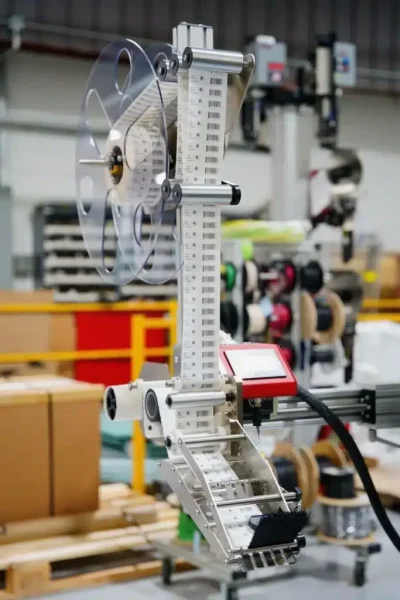
Anti-theft tagging applicators are automated or handheld machines that apply Electronic Article Surveillance (EAS) security tags to products or packaging — either during manufacturing or after packaging is complete.
If you need a quick answer on the top options, here’s a snapshot:
| Applicator Model | Best For | Speed |
|---|---|---|
| EAM MINI-ST DELTA | High-speed continuous lines | Up to 550 PPM |
| EAM MINI-ST FG24-2 | Mid-to-high speed production | Up to 400 PPM |
| EAM MINI-ST 300 | Intermittent motion lines | Up to 250 PPM |
| EAM RFID Series | RFID print-and-apply | Up to 16 ips print speed |
Retail shrinkage is a serious problem. Major retailers like Walmart and Target now require their suppliers to apply EAS security tags before products ever reach the store floor. This is called source tagging — and it’s no longer optional for most manufacturers.
The challenge? Applying thousands of tags per shift, consistently and accurately, without slowing down your production line.
That’s where the right applicator system makes all the difference. Whether you’re tagging apparel, electronics, pharmaceuticals, or consumer goods, there’s a purpose-built machine designed for your line speed, tag type, and mounting constraints.
EAM (Engineered Automation of Maine) specializes in exactly this — building high-speed, production-ready EAS tagging systems that integrate directly into your manufacturing process.
This guide breaks down the leading anti-theft tagging systems, key technical specs, and how to choose the right solution for your operation.
Understanding Anti-Theft Tagging Applicators and EAS Technology
To the uninitiated, an anti-theft tag might just look like a bulky plastic rectangle or a slightly thick sticker. But inside that housing is a sophisticated piece of Electronic Article Surveillance (EAS) technology. Anti-theft tagging applicators are the “workhorses” that bridge the gap between a raw product and a retail-ready, protected item.
The Two Pillars of EAS: AM and RF
In retail security, two primary technologies dominate the landscape:
- Acousto-Magnetic (AM): These systems operate at 58 kHz. They are known for their high detection rates and ability to work even near liquids or metals, making them a favorite for cosmetics and pharmaceuticals.
- Radio Frequency (RF): Operating typically at 8.2 MHz, RF tags are often thinner and resemble standard paper labels. They are highly popular for apparel and general merchandise.
An EAS Source Tag Applicator must be compatible with these formats. For instance, EAM’s Delta Tag system is designed to handle both AM and RF tags with equal precision. These machines don’t just “stick” a label; they apply the tag in a way that allows for easy signal deactivation at the cash register while remaining difficult for shoplifters to remove without damaging the packaging—a feature known as tamper-evidence.
How Anti-Theft Tagging Applicators Function in Production
Modern production lines move fast. To keep up, anti-theft tagging applicators utilize various motion profiles. Intermittent motion is used for lines where the product stops briefly for processing, while continuous motion allows for tagging on the fly at incredible speeds.
Key mechanical features often include:
- Vacuum Air Drums: These hold the tag securely using suction before “blowing” or “tamping” it onto the product. This is critical for applying labels around corners or on uneven surfaces.
- Micro-Stepper Drives: These provide the high-torque, high-precision movement needed to ensure the tag hits the exact same spot on every single box, even at hundreds of units per minute.
The Strategic Importance of Source Tagging for Manufacturers
If you’re a manufacturer in New England looking to get your products onto the shelves of big-box retailers, you’ve likely encountered “source tagging mandates.” Retail giants like Walmart and Target have shifted security responsibility from the store clerk to the factory floor.
Why Retailers Demand Source Tagging
By requiring manufacturers to use anti-theft tagging applicators during production, retailers achieve several goals:
- Reduced In-Store Labor: Employees no longer spend hours in the backroom manually applying “spider wraps” or stickers.
- Open Merchandising: When a product is securely tagged from the source, retailers feel comfortable placing high-value items (like headphones or expensive razors) on open shelves rather than behind locked glass. This “touch and feel” experience significantly increases sales.
- Shrinkage Reduction: Source-applied tags are often hidden inside packaging or integrated into the brand label, making them much harder for thieves to spot and disable.
Specialized Applications: From Apparel to Lumber
It isn’t just about small boxes. In the forestry industry, meeting UPC barcode and security requirements is a massive task. Handheld pneumatic tools like the FasTagger II allow workers in lumber mills across Maine and New Hampshire to staple tags onto the ends of lumber at rates of over 100 per minute. This replaces the tiring, manual process of hand-stapling, ensuring that every piece of timber is trackable and secure from mill to yard.
Benefits of Automated Anti-Theft Tagging Applicators
The move from manual to automated tagging isn’t just a compliance “box to check”—it’s a major efficiency play.
- Speed: Machines like the EAM MINI-ST DELTA can reach a staggering 550 PPM (products per minute).
- Accuracy: Unlike a tired human worker, a machine with a line-speed encoder will place a tag within a fraction of an inch every time.
- Integration: These systems are designed to play nice with other tech. For example, you can learn more about how these integrate with custom machine vision systems to verify that every tag is present and properly oriented.
Technical Specifications and Integration Capabilities
When selecting anti-theft tagging applicators, the “under the hood” specs determine whether the machine will thrive or dive on your production line.
Control and Precision
The modern applicator is a “smart” device. EAM systems typically feature:
- PLC Controls: Programmable Logic Controllers act as the brain of the operation. Modern units often eliminate the need for bulky external enclosures or “umbilical cords,” keeping the footprint small.
- Line-Speed Encoders: These sensors track the exact speed of your conveyor belt. If the belt speeds up or slows down, the applicator adjusts its timing instantly to maintain perfect placement.
- OIT Touchscreens: Operator Interface Terminals allow floor staff to change settings, skip products, or adjust tag locations with a few taps.
RFID and Smart Labeling Integration
The future of anti-theft is moving toward RFID (Radio Frequency Identification). Unlike standard EAS, which only tells a store “something is being stolen,” RFID tells the store “exactly what is being stolen.”
Systems like EAM’s integrated RFID labeling solutions take this a step further by offering print-and-apply capabilities. These machines can print a barcode, encode a unique RFID chip, verify the chip works, and apply it to a carton—all at speeds up to 16 inches per second. This provides unmatched supply chain visibility and meets the latest EPC Gen 2 protocols required by global logistics leaders.
Industry-Specific Applications for Security Tagging
Every industry has its own “security personality.” What works for a pair of jeans won’t work for a bottle of liquid vitamins.
- Apparel: Requires soft, flexible RF labels that won’t snag the fabric.
- Consumer Electronics: Often utilizes high-speed continuous motion applicators for small, high-value boxes.
- Pharmaceuticals: Needs high-accuracy placement to avoid covering critical drug facts or dosage information.
- Livestock: Uses specialized applicators for two-piece RFID ear tags, ensuring durability in harsh outdoor environments.
Selecting the Right Anti-Theft Tagging Applicators for Your Line
Before you buy, consider these three factors:
- Web Width: Ensure the machine can handle your specific tag size. The Delta Tag, for example, accommodates widths up to 3.5 inches (88mm).
- Mounting Options: Do you have a cramped line? Look for compact designs or H-frame stands that can be bolted to the floor for stability.
- Environmental Durability: If your facility is in a humid part of New England or a dusty warehouse, you need a machine built with reinforced thermoplastics or precision metal parts to resist corrosion.
To see the full range of hardware available for these diverse needs, you can explore more EAM products designed for industrial environments.
Frequently Asked Questions about EAS Applicators
What is the difference between AM and RF tagging technologies?
AM (Acousto-Magnetic) operates at a lower frequency (58 kHz) and is excellent for products with metal or liquid content. RF (Radio Frequency) operates at 8.2 MHz and is typically used for flat paper-style labels on dry goods and apparel. Most EAM applicators can be configured to handle either type.
How do automated applicators handle faulty or unverifiable RFID tags?
High-end EAM systems include a “Tag Rejecter” mechanism. If the system’s internal reader detects a faulty chip during the encoding process, a swing plate or rotating catcher intercepts the label before it reaches the product. This ensures that 100% of the products leaving your facility have a working security tag.
Can anti-theft applicators be retrofitted into existing packaging lines?
Absolutely. Most anti-theft tagging applicators are designed with a modular “bolt-on” philosophy. Because they use line-speed encoders to sync with your existing conveyor, they can usually be integrated without needing to redesign your entire production flow.
Ready to Choose the Right Anti-Theft Tagging Solution?
In the competitive world of modern manufacturing, security is no longer an afterthought—it’s a requirement for doing business with the world’s largest retailers. Implementing anti-theft tagging applicators is the most effective way to ensure compliance, reduce in-store labor, and protect your brand’s bottom line from the rising costs of shrinkage.
For over 30 years, EAM (Engineered Automation of Maine) has been a leader in providing these customized solutions. From our base in Biddeford, we serve manufacturers throughout New England—from the mills of Bangor to the high-tech hubs of Boston and Nashua. Whether you need a handheld tool for lumber or a 550 PPM automated beast for consumer goods, we have the expertise to keep your line moving and your products protected.
Ready to streamline your security process and meet those retail mandates? Contact EAM for anti-theft tagging solutions today and let’s build a system that works for you.