
Why Robotics for Inspection Is Changing Industrial Quality Control
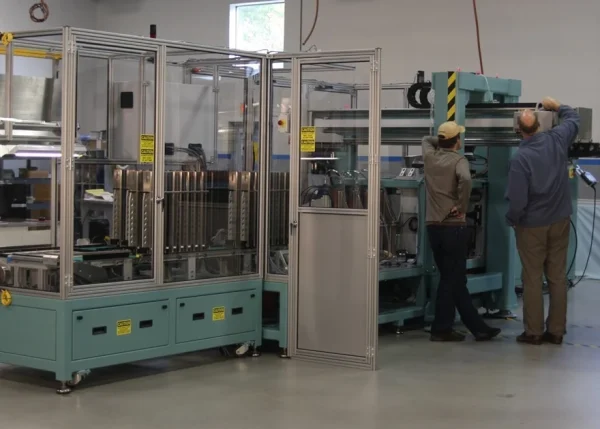
Robotics for inspection gives manufacturers and plant operators a faster, safer, and more consistent way to monitor equipment, detect defects, and maintain quality — without putting workers in harm’s way.
Here’s a quick look at how inspection robots are used across industries:
| Use Case | Robot Type | Key Benefit |
|---|---|---|
| Facility patrol & gas leak detection | Quadruped (legged) | 24/7 autonomous coverage |
| Pipeline & tank corrosion checks | Magnetic crawler | Access without shutdown |
| PCB and assembly quality control | Cobot / AMR | High-speed, repeatable results |
| Hazardous zone monitoring | ATEX-certified ground robot | Safe operation in explosive areas |
| Confined space access | Inspection crawler | No personnel exposure |
The core idea is simple: robots can go where humans shouldn’t, work around the clock, and collect more data — more consistently — than any human team.
One facilities engineer put it plainly — robots can process multiple sensor inputs simultaneously, while humans are typically limited to two or three observations at once. That gap compounds fast when you’re managing a large facility with hundreds of inspection points.
For manufacturing managers at companies like EAM’s customers, this isn’t just about safety. It’s about uptime, consistency, and cutting the cost of unplanned failures before they ripple through a production line.
The Strategic Advantages of Robotics for Inspection
In industrial maintenance, “business as usual” often means sending a technician into a loud, hot, or cramped space with a clipboard and a handheld thermal camera. Robotics for inspection flips this script. By automating these rounds, companies across New England—from Biddeford, Maine, to Manchester, New Hampshire—are seeing immediate shifts in how they manage their assets.
One of the most compelling reasons to adopt these systems is the sheer volume of data they can handle. Research shows that some autonomous systems have already logged over 200,000 hours in completed missions, covering 200,000 kilometers of industrial terrain. In a single mission, a high-end robot can analyze up to 500 different inspection points. That level of detail is nearly impossible for a human team to replicate daily without fatigue or oversight.
Primary Benefits for Industrial Safety
Safety isn’t just a buzzword; it’s a measurable metric. By deploying robotics for inspection, facilities can remove personnel from “dull, dirty, and dangerous” tasks.
- Confined Spaces: Robots like the Wombat crawler or the VersaTrax NDT can enter crawlspaces, tanks, and pipes where air quality might be poor or structural integrity is unknown.
- Hazardous Environments: In ATEX zones (areas with explosive atmospheres), specialized robots like the Taurob Inspector provide a safe way to monitor gas levels and equipment health without risking a spark.
- High-Voltage Substations: Autonomous robots can patrol energized areas, using thermal and acoustic sensors to find “hot spots” or arcing before a catastrophic failure occurs.
Core Sensors Driving Robotics for Inspection
A robot is only as good as its “eyes” and “ears.” Modern robotics for inspection platforms integrate an array of high-tech sensors that provide what some call “super-human” intelligence:
- Thermal Imaging: Detecting temperature differences from -40°C to 550°C to find overheating bearings or failing electrical components.
- Acoustic Sensors: Specialized microphones that can “hear” air leaks or abnormal vibrations that are undetectable to the human ear.
- LiDAR: Laser-based scanning that allows the robot to build a 3D map of its environment for navigation and to detect structural changes over time.
- 4K Visual Zoom: High-definition cameras with up to 20x optical zoom to read gauges, inspect welds, or check for corrosion from a distance.
- Gas Detection: Integrated sensors from brands like Honeywell or Drager that sniff out methane or other hazardous gases in real-time.
Automated Quality Inspection in Manufacturing
In the controlled environment of a factory floor—common in the industrial hubs of Worcester or Lowell, Massachusetts—the focus shifts to speed and precision.
- High-Speed Testing: Using OMRON cobots, companies have achieved rates of 400 tests per hour for PCB (printed circuit board) testing.
- Packaging Efficiency: Automated quality inspection can boost output to 300 packs per minute, ensuring every label is straight and every seal is tight.
| Feature | Quadruped (Legged) | Magnetic Crawler | AMR / Cobot |
|---|---|---|---|
| Terrain | Stairs, gravel, uneven floors | Steel walls, pipes, tanks | Flat factory floors |
| Primary Sensor | Visual, Thermal, Acoustic | UT, TECA, NDT probes | High-speed Vision |
| Mobility | High (Free-roaming) | Medium (Tethered or Magnetic) | High (Defined paths) |
| Typical Use | Facility patrol | Infrastructure health | Quality control |
Advanced Sensor Integration and AI Capabilities
The magic of robotics for inspection isn’t just in the movement; it’s in the data processing. Modern systems use “edge computing,” which means the robot processes the data it sees locally, in real-time, rather than sending everything to a distant server first.
Overcoming Challenges in Robotics for Inspection
Deploying a robot isn’t always plug-and-play. There are real-world hurdles that EAM helps customers navigate:
- Connectivity: What happens if the Wi-Fi drops out in a lead-lined room? Advanced robots like Keyper are designed to operate without GPS or a constant internet connection. They map the environment in 3D and “store” their findings until they reach a signal area.
- Battery Life: While 90 minutes might seem short, quick-swap battery systems and “smart docking” ensure that a fleet can provide 24/7 coverage.
- Obstacle Negotiation: A robot that gets stuck on a 15 cm pipe is a liability. Leading models now feature 14 cm obstacle clearance and self-righting capabilities—if they trip, they simply stand back up and keep going.
Future Trends in Robotics for Inspection
As we look toward the next decade of automation in New England, several trends are emerging:
- Multi-Robot Fleets: Instead of one robot doing everything, specialized fleets of drones and ground robots will work together. A drone might spot a potential issue from the air, and a ground robot will be dispatched to perform a close-up ultrasonic test.
- Digital Twins: Integration with digital twins allows a robot to “see” what a machine should look like and instantly flag any deviation, such as a new rust spot or a missing bolt.
- 5G Connectivity: Faster networks will allow for seamless teleoperation from hundreds of miles away, enabling an expert in Portland, Maine, to “drive” a robot in a remote mining facility.
Deployment Models and ROI Analysis
Investing in robotics for inspection can be approached in two main ways: capital purchase or Robot as a Service (RaaS).
- Capital Purchase: Buying the hardware and software outright. This is often preferred by large facilities with long-term, fixed inspection routes.
- Robot as a Service (RaaS): A subscription model that allows companies to “hire” a robot. This lowers the entry barrier, as there is no massive upfront investment, and the vendor typically handles maintenance and software updates.
Case Studies in Efficiency
The numbers tell a convincing story for any business owner in Augusta or Bangor:
- Production Uptime: Regular thermal readings by robots have been shown to increase production uptime by 1.5% by catching equipment failures before they happen.
- Rapid ROI: Automated PCBA testing systems have delivered a full return on investment in just 24 months. In high-speed packaging environments, that ROI can drop to as little as 14 months.
- Consistency: Unlike human inspectors who might vary in their assessment, a robot provides objective, auditable data every single time.
Frequently Asked Questions
How do robots handle inspections in explosive environments?
Robots designed for these areas are “ATEX-certified.” This means they are built with specialized enclosures and electronics that prevent any internal spark from escaping and igniting the surrounding atmosphere. They undergo rigorous testing to ensure they can safely operate in Zone 1 and Zone 2 environments.
Can inspection robots operate without a constant internet connection?
Yes. Many advanced inspection robots use LiDAR and 3D mapping to navigate “offline.” They follow a pre-programmed path and store all sensor data (thermal images, gas readings, etc.) on internal drives. Once the robot returns to a docking station or a zone with Wi-Fi, it uploads the data to the central management system.
What is the typical ROI timeframe for automated inspection systems?
While it varies by industry, many manufacturing applications see an ROI within 14 to 24 months. This is calculated by factoring in the reduction in unplanned downtime, the elimination of manual inspection labor costs, and the prevention of catastrophic equipment failures.
Smarter Inspections Start with EAM
The shift toward robotics for inspection is no longer a futuristic concept—it is a practical necessity for staying competitive in today’s industrial landscape. From the rugged coast of Maine to the busy manufacturing hubs of Massachusetts, these autonomous tools are helping businesses work smarter, keep their people safer, and ensure that their quality control is beyond reproach.
Engineered Automation of Maine (EAM) has been at the forefront of this evolution for over 30 years. Based in Biddeford, ME, EAM specializes in designing and manufacturing custom automation equipment that integrates seamlessly into your existing workflows. Whether you need to automate a complex assembly line, improve your labeling precision, or deploy a fleet of robots to monitor your facility, EAM provides the expertise to make it happen.
By focusing on customized solutions and operational efficiency, EAM ensures that your investment in robotics delivers real-world results. If you’re ready to see how a tailored robotic solution can transform your inspection process and boost your bottom line, the team at EAM is ready to help. Learn more about our robot integration services.