
5 Things to Expect in the Custom Manufacturing Automation Process
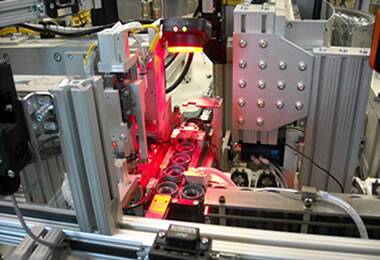
Custom manufacturing automation solutions have revolutionized the way companies operate, from streamlining operations, enhancing efficiency, and reducing costs to boosting productivity, quality, and safety. By automating repetitive tasks and processes, manufacturers can free up resources to focus on more complex and value-added tasks, thereby improving operational flexibility and scalability. This enables businesses to respond quickly to changing market demands, adapt to new technologies, and expand their product offerings without compromising on quality.
Thus, as demand grows and business expands, automation gives manufacturers a competitive advantage in an increasingly complex and competitive business environment. If your company is considering investing in custom manufacturing automation or integrating automation into your current operations, here are five important things you can expect:
1. Increased Efficiency and Productivity
One of the first things to expect when integrating custom manufacturing automation processes into your manufacturing facility is a boost in efficiency and productivity. This is realized principally through the automation of repetitive tasks, which optimizes workflows and allows manufacturers to achieve faster production cycles and higher output. In custom automation, human error is reduced by replacing manual processes with precise, repeatable automated systems that perform tasks consistently and accurately.
Unlike humans, machines do not suffer from fatigue, distraction, or variability, which are common causes of mistakes in manufacturing that undermine productivity. Incorporating advanced technologies such as sensors, robotics, and machine vision into production processes ensures that operations are performed precisely, detecting and correcting errors in real-time. Automated systems can also follow programmed instructions and quality control protocols, minimizing deviations from specifications and further enabling more productive and efficient manufacturing capabilities.
2. Improved Product Quality and Consistency
Increased efficiency and productivity are related to improved product quality and consistency that custom automation offers by leveraging precision-driven technologies to execute tasks with exact accuracy and repeatability. As mentioned above, automated systems ensure that each product adheres to strict specifications, minimizing variations caused by human error that can affect consistency and quality.
Integrated quality control mechanisms, such as vision systems and sensors, detect defects in real-time, allowing for immediate corrections and reducing waste. Advanced software enables continuous monitoring and fine-tuning of processes, maintaining optimal conditions for production. By standardizing operations and eliminating inconsistencies, automation ensures a consistently high level of product quality, enhancing customer satisfaction and brand reputation.
3. Cost Savings Over Time
Manufacturing automation realizes cost savings by optimizing labor, reducing waste, and improving operational efficiency, which enable manufacturers to meet higher demand more efficiently. As automated processes can handle repetitive tasks and operate continuously with minimal supervision, production capacity can be increased significantly without proportional increases in labor costs. This lowers the need for extensive manual labor and its associated costs. Automation further reduces cycle times and optimizes workflows, ensuring that higher volumes of products can be produced quickly and consistently as needed while minimizing delays and backlogs. With precise and consistent production, automation decreases the likelihood of defects and rework, reducing material costs. Energy-efficient machinery and optimized workflows cut utility expenses, while predictive maintenance prevents costly downtime and repairs. Over time, these efficiencies accumulate, offsetting the initial investment and delivering significant cost savings in labor, materials, operational overhead, and the capability to meet changing production demands.
4. Scalability and Flexibility
The ability to adapt to changing production demands, whether increasing volumes or introducing new product variants, is another benefit to expect with the introduction of custom manufacturing automation. Such scalability and flexibility enable manufacturers to quickly meet changing production demands and market requirements. Automated systems can be scaled to increase or decrease production volumes without significant downtime or retooling, switching between designs, materials, or processes with minimal disruption. This greater flexibility ensures manufacturers can respond effectively to evolving customer needs and industry trends, making their operations more resilient and competitive.
5. Enhanced Competitive Advantage
Automation in manufacturing positions companies to respond faster to market demands with high-quality products that can provide a competitive advantage in the marketplace. How? Faster production, consistent quality, and cost efficiency, which directly translate into better market responsiveness and profitability, can be expected through custom manufacturing automation processes. Automated systems reduce lead times, allowing companies to meet customer demands quickly and reliably. Enhanced precision and real-time quality control ensure superior products that build customer trust and satisfaction. Streamlined processes that lower production costs and reduce waste can keep prices competitive while maintaining profitability. Because automation enhances flexibility, companies can adapt quickly to changing trends, customer preferences, and demand fluctuations. Combined, these factors can position companies as industry leaders, capable of outperforming competitors and capturing a larger market share.
EAM is a leader in leveraging the latest technologies and techniques into custom manufacturing automation solutions that address each of our client’s unique needs. By taking a personalized approach, we can help businesses overcome specific challenges and achieve their goals. With close collaboration between our team of engineers and clients, we design, build, and integrate automation systems that drive performance and growth. For more information on how we can help your business, contact EAM today.