
Types of Automation Systems in Manufacturing
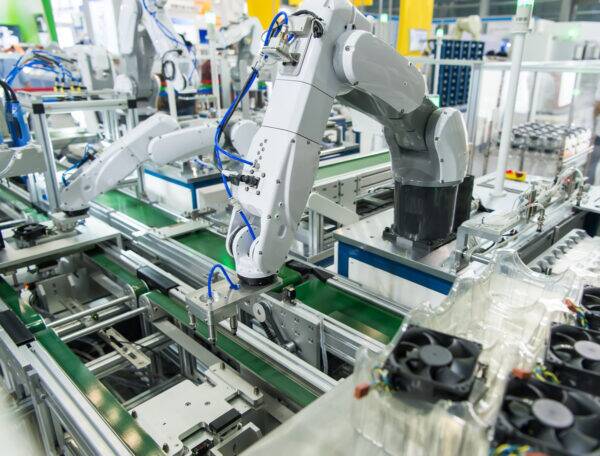
In today’s fast-paced manufacturing landscape, choosing the optimal automation system is no longer optional—it’s essential. From high-volume, single-product operations to dynamic, mixed-batch workflows, understanding the spectrum of industrial automation systems can give your business the competitive edge. In this post, we break down the key types of automation in manufacturing—fixed, programmable, flexible, and integrated—highlighting how each optimizes efficiency, accuracy, and cost-effectiveness in different production scenarios. Prepared to discover which automation approach aligns with your production goals? Let’s dive in.
1. Fixed Automation
Fixed automation, or hard automation, refers to an automated manufacturing system where the production processes and assembly are preset to produce a single product. These systems are designed to produce a particular product or a limited range of similar products in a highly repetitive and efficient manner. The sequence of production and operation is fixed by the configuration of tooling, equipment, and machinery, which is dedicated to a specific set of tasks to meet high-production needs.
To produce a specific product, fixed automation systems require a high initial investment in specialized machinery and equipment to manufacture that product. By definition, these types of automated manufacturing systems are inflexible. Once set up, they are not easily adaptable if there are any changes in the product design or production requirements. However, the ROI for manufacturers is assured by the fact that a fixed automation system is ideal for high production environments where the product demand is consistent and stable and where production processes can be standardized to produce identical products or components rapidly and efficiently, with high precision and reliability. A good example of a hard automation system is an automotive assembly line.
2. Flexible Automation
As the name suggests, flexible automation manufacturing systems are those easily reprogrammed or adapted to produce different products or handle variations in production processes. Flexible automation, also called soft automation, allows manufacturers to quickly adapt and respond to production demands. It is noted for its increased efficiency, improved quality, and greater flexibility to respond to rapidly changing markets. A key feature is next-to-zero downtime with minimum manual changeover procedures. Another feature is adaptability. The system’s ability to easily reconfigure or reprogram production processes to handle different tasks or product variations sets it apart from fixed automation. Flexibility also means scalability as the system can scale up or down to meet varying production volumes as needed without significant redesign or reengineering.
In flexible automation processes, machines are controlled by computerized systems programmed and operated by humans, either through multipurpose CNC machines or HMI (Human Machine Interfaces). The system works well for in-demand production or batch production runs. Technology and systems can be adapted to accommodate changes in production requirements. A higher investment for custom machinery and higher costs per unit are cons of flexible automation. Flexible automation is particularly valuable in food processing, aerospace, electronics, consumer goods manufacturing, and textile manufacturing.
3. Programmable Automation
Programmable automation manufacturing systems utilize automated or robotic equipment controlled by commands delivered by a computer program. Programming can be changed to accommodate batch production processes or medium-to-high production volumes. Products can be produced in batch quantities ranging from a few dozen to thousands of units in one run.
Programmable Logic Controllers (PLCs) are a critical component of programmable automation. PLCs allow for the programming and control of different automated processes. Programmable automation systems are ideal for customizing production tasks, monitoring the status of various components, or responding to changes in the production environment. There are initial investment costs to consider and, though reprogramming is necessary and changeover is time-consuming when changing out batch runs, unlike fixed automation systems, programmable automation systems allow for greater flexibility to change out products as needed or handle a variety of designs when needed. Some applications include intelligent robotic machines, industrial robots, and in paper and steel rolling mills.
4. Process Automation
Process automation involves using technology to automate manual processes through data and systems integration. A key feature of process automation involves the integration of various hardware and software systems to automate tasks that were traditionally performed by humans. It combines different types of industrial automation into one, creating a flexible and integrated automation system that improves efficiency, reduces costs, and allows employees to focus on other tasks.
Automation programming performs repetitive tasks, controls and monitors production processes, centralizes information, and optimizes overall efficiency throughout the factory or production environment. An automated network connects various hardware components like controllers, sensors, actuators, valves, and operator terminals to regulate process variables like temperature, flow, pressure, switches, etc. Industries like wholesale distribution and warehouses, oil and gas logistics, pharmaceuticals, and the food and beverage industry benefit from process automation systems.
Choose the Right Automation System to Accelerate Your Manufacturing Future
Whether you’re aiming to reduce costs, improve throughput, or enhance product quality, our engineered automation products and support systems can help you achieve it. Serving industries from automotive and food processing to microelectronics and precision medical equipment, EAM delivers precise, performance-driven automation that scales with your ambitions.
Ready for a manufacturing upgrade? Reach out to EAM today to explore which types of automation in manufacturing best align with your goals—and take your operations to the next level.